Learning Collective Dynamics & Interacting Particle Systems
How can hidden interaction mechanisms be inferred from collective behavior under incomplete observations and partial model knowledge?
My work in collective dynamics studies both the forward and inverse relationship between microscopic interactions and emergent macroscopic behavior. Earlier work on swarmalators examined how competing attractive and repulsive interactions generate distinct collective states through modeling and analysis. This naturally motivates the inverse question: what can observed collective behavior reveal about the interactions that produced it?
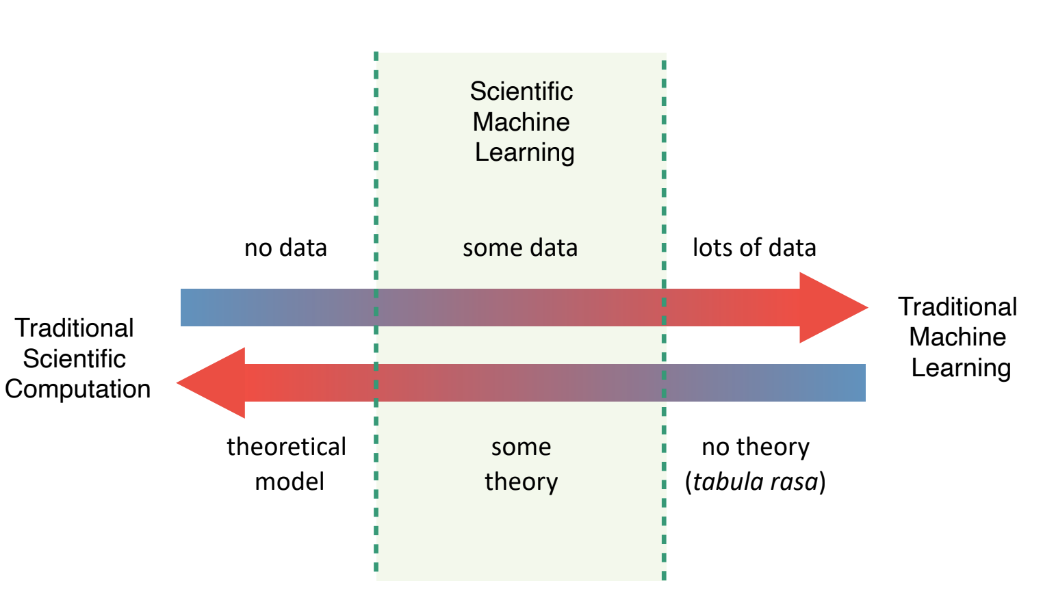
Classical interaction-learning methods typically assume rich trajectory data and a prescribed interaction architecture. My current work instead asks what remains identifiable when these assumptions break down: when only steady-state patterns are observed, when the interaction topology is unknown, or when part of the governing dynamics itself is missing. Across these settings, the central question is how the observation regime and the structure of the dynamics determine what can and cannot be recovered.

Learning from Limited Observations
We study how interaction kernels can be recovered when only collective steady states are observed. Such data make system identification highly degenerate, and we show that identifiability is governed by the distribution of observed configurations together with the structural information encoded in the patterns themselves.
Learning Interaction Topology
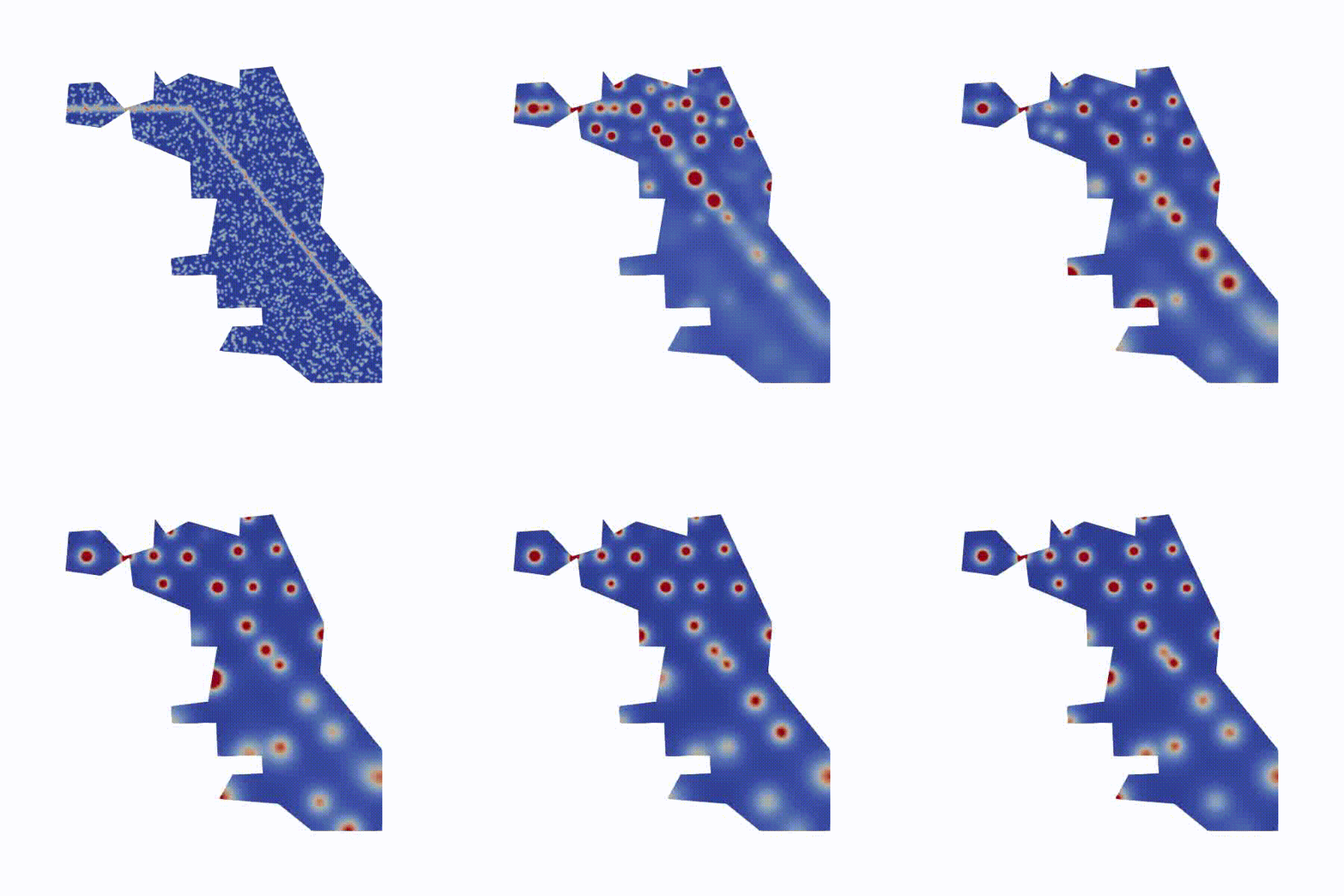
We develop methods that ask not only how agents interact, but also who interacts with whom. This includes metric, nearest-neighbor, Voronoi, density-dependent interaction rules, etc., with the goal of identifying interaction structure and interaction kernels jointly.
Discovering Explainable Physics
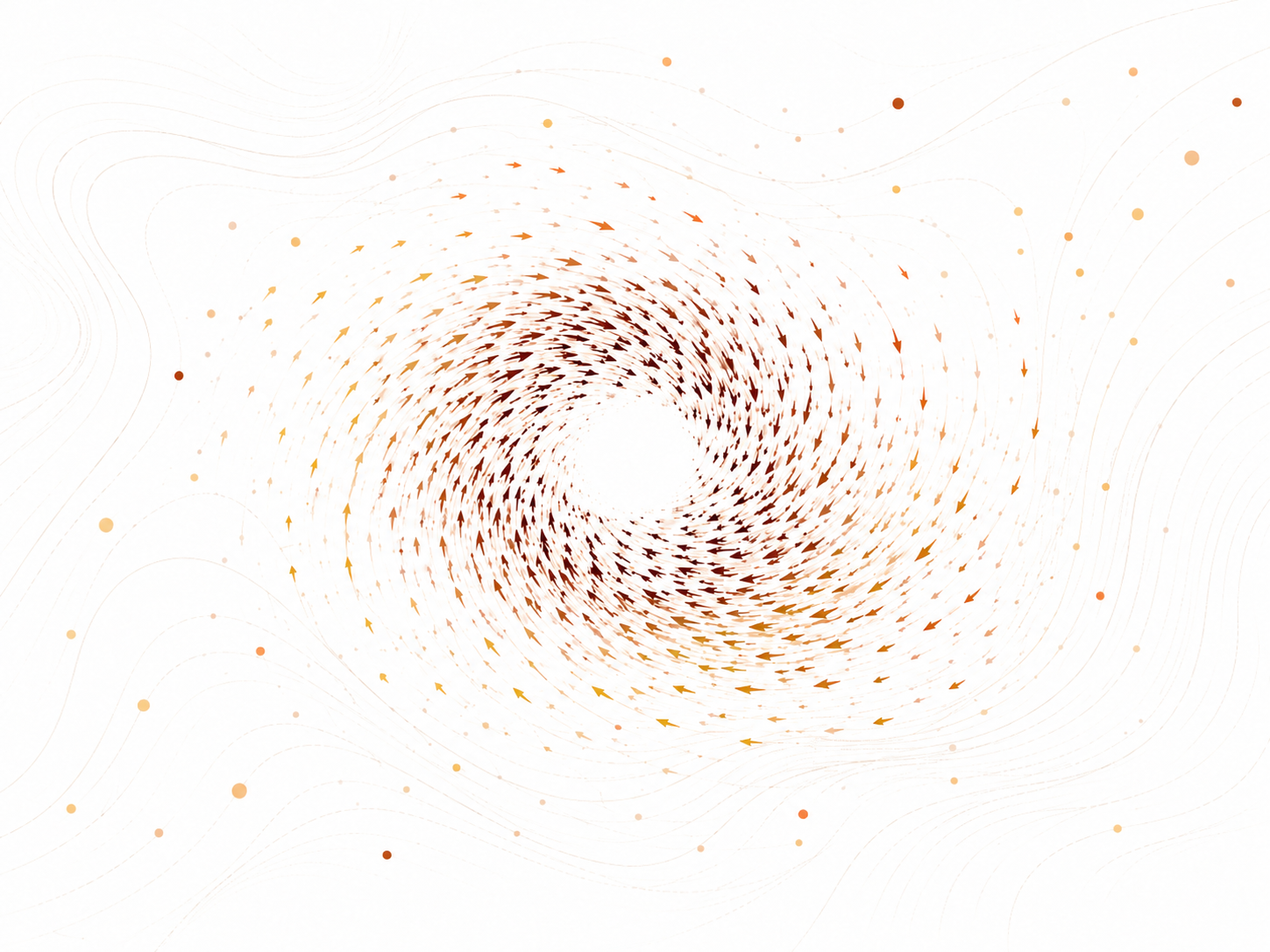
We develop a family of learning methods that infer interpretable gravitational structure directly from NASA JPL Horizons ephemerides with minimal prior assumptions. The learned models aim for both physical explainability and long-term predictive precision, enabling inference of quantities such as source masses or missing planets and reaching the accuracy needed to probe subtle effects such as perihelion precession.